
Op-eds in the New York Times and Washington Post saying that the new Forward party is doomed to fail recite the same tired arguments about the futility of third parties in the United States. Following the line of thinking espoused by columnists Jamelle Bouie (“Why Andrew Yang’s New Third Party Is Bound to Fail”) and Paul Waldman (“Why the third-party talk from Forward goes nowhere”), US citizens might as well throw up their collective hands in surrender.
The current assaults on our democratic republic by the extreme right, coupled with ineffective leadership by Democrats, are a dire threat to its continuation. If both “major” parties continue unabated on their present course, it’s likely only a matter of time before the country devolves into an autocracy or oligarchy. That’s common sense.
Common sense is what the Forward Party advocates. It’s also what Thomas Paine advocated in his iconic book that inspired the American Revolution.
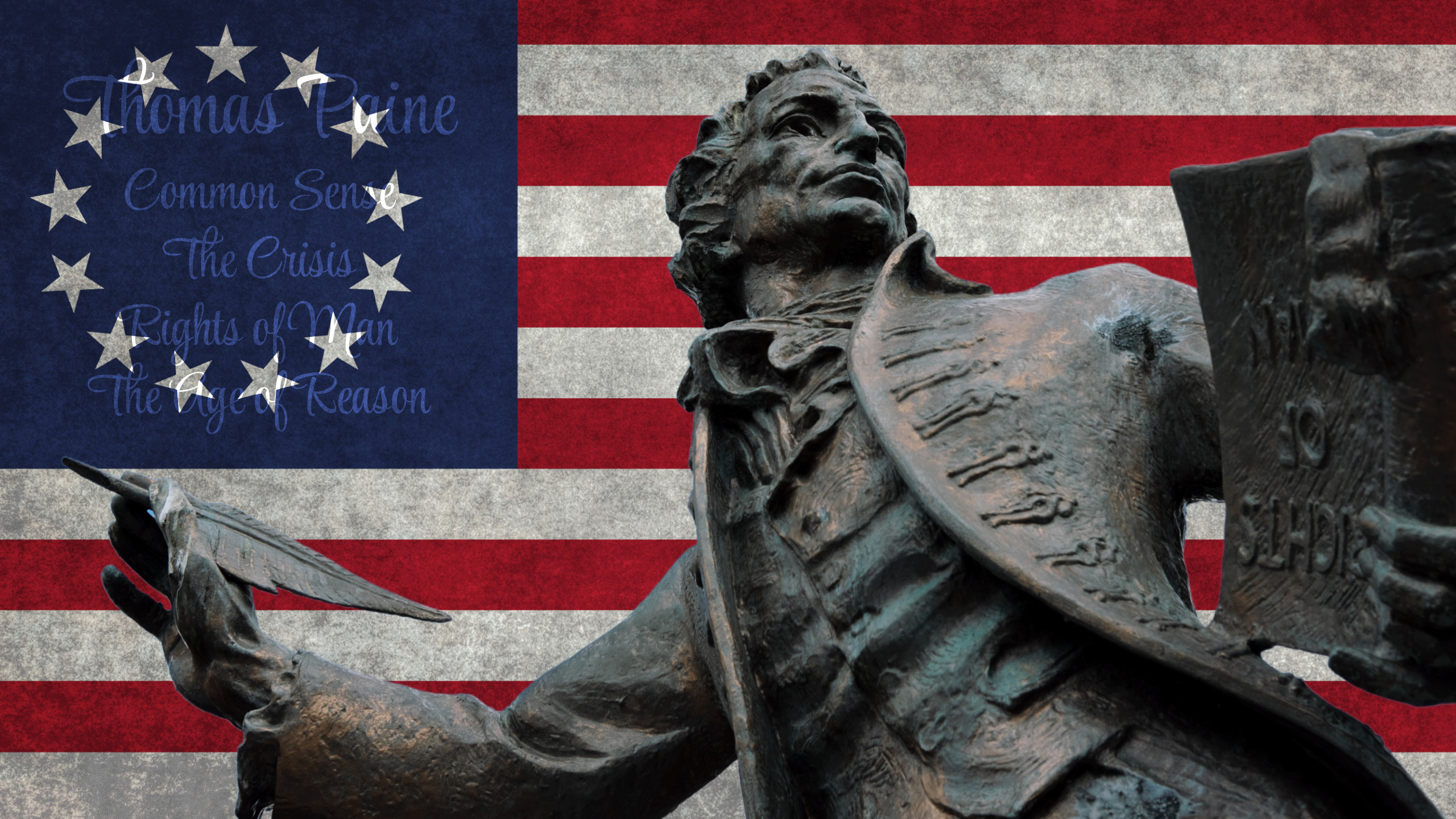
Notes an article on History.com entitled, “How Thomas Paine’s ‘Common Sense’ Helped Inspire the American Revolution,” “The 47-page pamphlet took colonial America by storm in 1776 and made critical arguments for declaring independence from England…Even after armed hostilities broke out between the American colonists and British forces in 1775, many prominent colonists seemed reluctant to consider the idea of actually breaking away from Britain, and instead insisted that they were still its loyal subjects, even as they resisted what they saw as its tyrannical laws and unfair taxation. But a single 47-page pamphlet—the 18th-century equivalent of a paperback book—did a lot to quickly change that, and shift American sentiment toward independence.”
The article continues, “Common Sense, written by Thomas Paine and first published in Philadelphia in January 1776, was in part a scathing polemic against the injustice of rule by a king. But its author also made an equally eloquent argument that Americans had a unique opportunity to change the course of history by creating a new sort of government in which people were free and had the power to rule themselves.”
Paine’s “Common Sense” became the nation’s first viral superstar, according to an article in ConstitutionCenter.org headlined, “Thomas Paine: The original publishing viral superstar.” Notes the article, “On January 10, 1776, the publication of Thomas Paine’s Common Sense became the first viral mass communications event in America. The first version of Paine’s pamphlet was printed just a few blocks from the current-day National Constitution Center in colonial Philadelphia in 1776, and it went viral, in the current sense of the word, when it hit the cobblestone streets here.”
Quantifying the viral impact, the article points out, “Common Sense sold 120,000 copies in its first three months, and by the end of the Revolution, 500,000 copies were sold. The estimated population of the Colonies (excluding its African-American and Native American populations) was 2.5 million. An estimated 20 percent of colonists owned a copy of the revolutionary booklet. In current-day sales, that would amount to sales of 60 million, not including overseas sales. Only a handful of books have sold more than 60 million copies in the past two centuries, and those books had the benefit of modern publishing outlets and promotion. In the case of Common Sense, the publicity was spread literally through word of mouth, since people would buy the pamphlet and shout the words on street corners and inside taverns for the illiterate to hear.”
The op-ed writers totally miss the point. While US third parties historically have looked like Sisyphus trying to push the rock up the hill, we need to start somewhere. If Thomas Paine had let naysayers of the day prevail, the US might still be speaking the King’s English.
 Gray Flannel Head